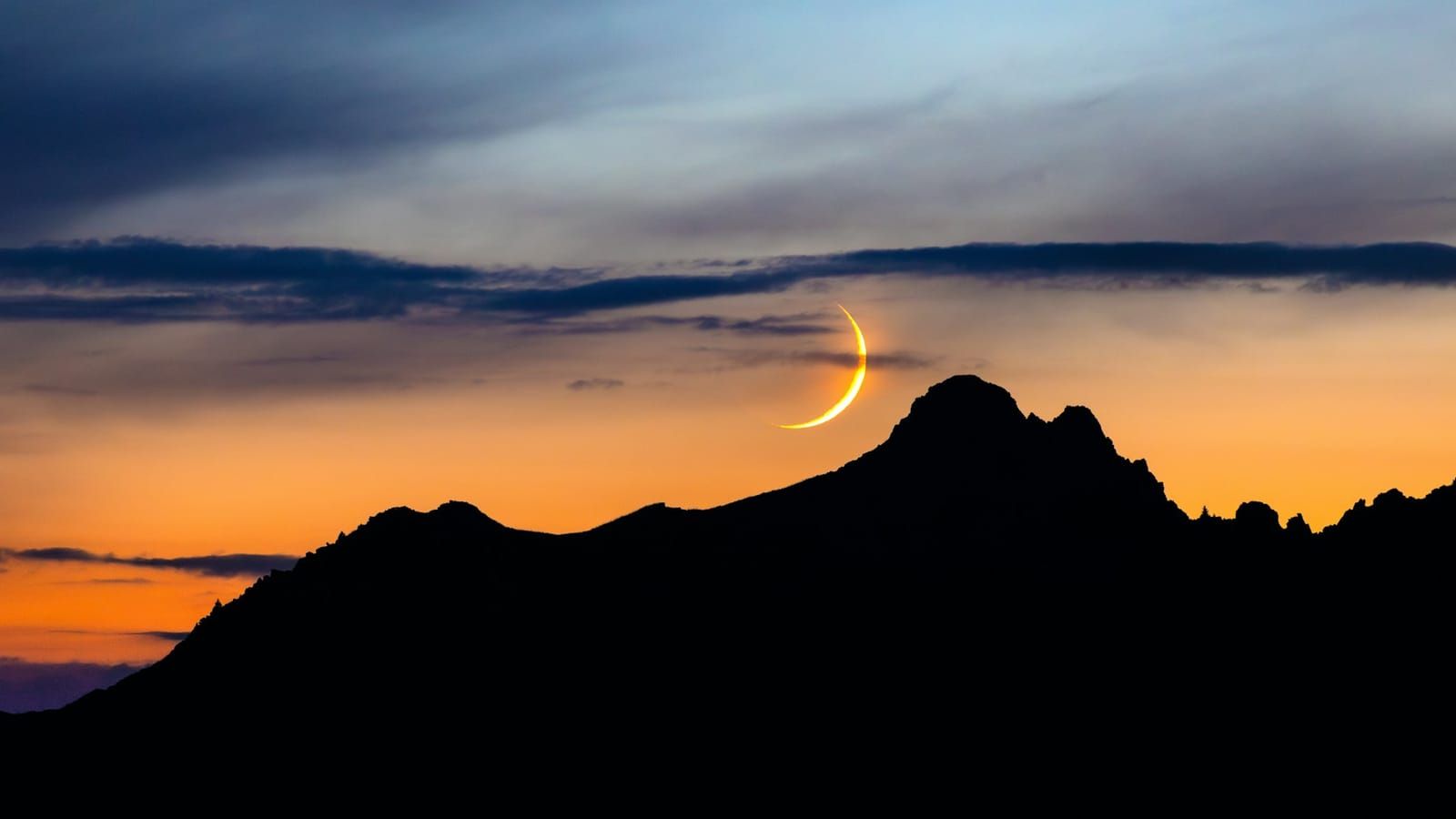
A day has a character because its sky is unlike any other day’s. The Moon is in a different phase than it was yesterday and, every two and a half days, in a different sign; planets are entering signs, turning retrograde or forming angles with one another; the Sun is a degree further along its yearly path. Read as a whole, that configuration can be turned into one theme for the date: what the day might be good for, what to be mindful of, what to ask yourself. The theme is the same for everyone, because the sky is. How it plays out in your life is the personal part.
This is the idea at the centre of a cosmic guide, and it is the one most likely to be mistaken for a horoscope. This article sets out what goes into a day’s character, how it becomes a theme, and why a shared theme turns out to be more useful than a personal prediction.
We already give days characters
Start with the ordinary version. Monday has a character. So does the last day before a holiday, the first warm day in spring, the day after a bad night. We explain days rationally, by the calendar, the weather and how we slept, and the explanation is usually right as far as it goes. But it goes a short way. Most days are left without a character at all: Tuesday, overcast, fine.
A day without a character is hard to live in deliberately. There is nothing to lean into or push against, just a list. The appeal of any daily rhythm, religious, seasonal or lunar, is that it hands every day a shape before you have done anything with it. The sky is one source for that shape, and it has two advantages: it changes every day, and you can go outside and look at it.
What changes in the sky from one day to the next
Four things, roughly in order of how much they change.
The Moon’s phase. The lit part of the Moon grows and shrinks over 29.5 days. The phase tells you where you are in the cycle: beginning, building, peak, finishing, rest. It is the eight phases, or, more simply, waxing or waning.
The Moon’s sign. The Moon crosses one zodiac sign about every two and a half days, so its sign changes roughly thirteen times a month. In the tradition each sign gives the Moon a different mood: quick in Aries, settled in Taurus, talkative in Gemini, and so on through the twelve. This is the fastest-changing piece of the sky’s character and the one that most often distinguishes today from yesterday.
Events. Less often, something notable happens: a planet enters a new sign, which is called an ingress; a planet appears to stop and turn backwards, which is a retrograde; two planets reach an exact angle, which is an aspect. Events colour a stretch of days rather than a single one, and a day with two or three of them has more going on than a day with none. Ingresses and aspects are explained in their own article.
The Sun’s sign. The slowest: about a month per sign, and the one that gives a day its season.
Put together, these never repeat exactly. The Moon’s phase and sign line up differently each month; the planets drift; an aspect that is exact today will not be exact again for months or years. Each day’s sky is, in a literal sense, a one-off.
From sky to theme
A configuration is not a character yet. The step in between is interpretation, and it is worth being clear about how it works so that it does not look like magic.
The tradition assigns meanings to each piece: phases to stages of a cycle, signs to moods, planets to areas of life, aspects to kinds of tension or ease. Those meanings are old, consistent and, whatever their origin, shared across the people who use them, which is what makes them a language rather than a private code. Reading a day means asking what the pieces say together. A waning Moon in Virgo on a day Mercury stations direct says, in that language, something like finish the careful thing; the stuck conversation can move again. A waxing Moon in Leo with the Sun entering Aries says something like begin, and let it be seen.
A good day theme does three things with that reading. It names it in one phrase that could not belong to any other day. It turns it into a few suggestions: what the day might be good for, one thing to focus on, one thing to be mindful of. And it ends in a question, because a theme you can answer back to is a theme you can use.
What it does not do is predict. Nothing in the reading says what will happen. A day that suits finishing is not a day on which things get finished; it is a day on which finishing is a reasonable thing to try.
Why the theme is shared
Here is where a cosmic guide and a horoscope part company. A horoscope is sorted by Sun sign: twelve texts a day, each addressed to a twelfth of the population, each phrased as though it were about you. A day theme is one text, addressed to the date.
That sounds less personal, and in one sense it is. But it fixes two problems with the horoscope format. The first is honesty: the sky on a given day is the same for everyone, so a theme drawn from it ought to be too. Pretending otherwise is what makes horoscopes feel like cold reading. The second is usefulness: a shared theme can be specific, because it does not have to fit a twelfth of the world. It only has to fit the day.
The personal part is then done properly, as a separate layer. How does a day for finishing show up in your work, in your relationships, in a decision you are weighing? That is a question about your life, not your sign, and it can be answered with your own chart if you have one or with your own circumstances if you do not. The theme is the frame; the reading inside it is yours.
Living with a day that has a character
In practice, a day’s character is used in small ways.
- As a default. On a day that suits starting, start the thing you have been circling. On a day that suits finishing, clear the list. The day does not make you; it breaks ties.
- As permission. A theme that says do less is a licence that most to-do lists never issue. Some days are, in the sky’s terms, for rest, and knowing that lets you rest without arguing.
- As a question. The reflection question at the end of a theme is the part people keep. What am I forcing? on a day that suits waiting. What became visible? at a full Moon. A good question keeps working all day.
- As a story. When a day goes badly, a character gives the badness somewhere to sit. It was a stuck, tense-angled, waning-crescent sort of day. That is not an explanation; it is a shape, and a shape is easier to carry than a verdict on yourself.
And when the theme does not fit, say so. Some days nothing in the sky lines up with anything in your life, and the honest response to a lens that shows nothing is to put it down until tomorrow. Tomorrow has a different sky.
Where this lives in Cosmia
Cosmia’s Today screen is built from this exactly. The Day Cover shows the date’s Cosmic Facts: the Moon’s phase and day of the cycle, its sign, and up to two events. Under it, the Day Theme: a phrase and a line (what it means is one tap away), what the day might be good for, one focus, one thing to be mindful of, one question, and a small step. The theme is the same for everyone that day; the Align tab reads it into five areas of your life, with a Tarot card for each. For the curious there is a Why Today’s Energy? layer that shows which parts of the sky the theme came from. If a day with a character sounds better than a day with a list, that is what the app is for. The overview is in what is a cosmic guide.